An integrated brand system is a brand where the strategy, the identity, the voice, the website and the marketing are designed together, from one positioning decision, so every surface a customer meets is recognisably the same business. Most Australian businesses do not have one. They have a logo from one supplier, a website from another, a social feed run by a third, and a sales deck someone made in-house. Each piece is fine. Together they are forgettable.
It happens gradually. The business starts with a logo. A web developer builds a site around it. A marketing freelancer writes copy in their own voice. A printer lays out the brochure. Two years later a new hire redesigns the pitch deck because the old one looked dated.
Nobody did anything wrong. But nobody was responsible for the whole, so the whole drifted. The website says one thing, the deck says another, the Instagram feed looks like a different company, and the customer who sees all three in a week forms a vague impression rather than a clear one.
Vague impressions do not get remembered. And a brand that is not remembered is not chosen, however good the work behind it.
It does not mean everything matches. Matching is easy and shallow. It means everything comes from the same decision.
A brand system starts with positioning: who the business is for, what it stands for, where it sits against competitors. From that decision, the identity is built to express it. The voice is written to sound like it. The website is structured to prove it. The marketing is planned to repeat it.
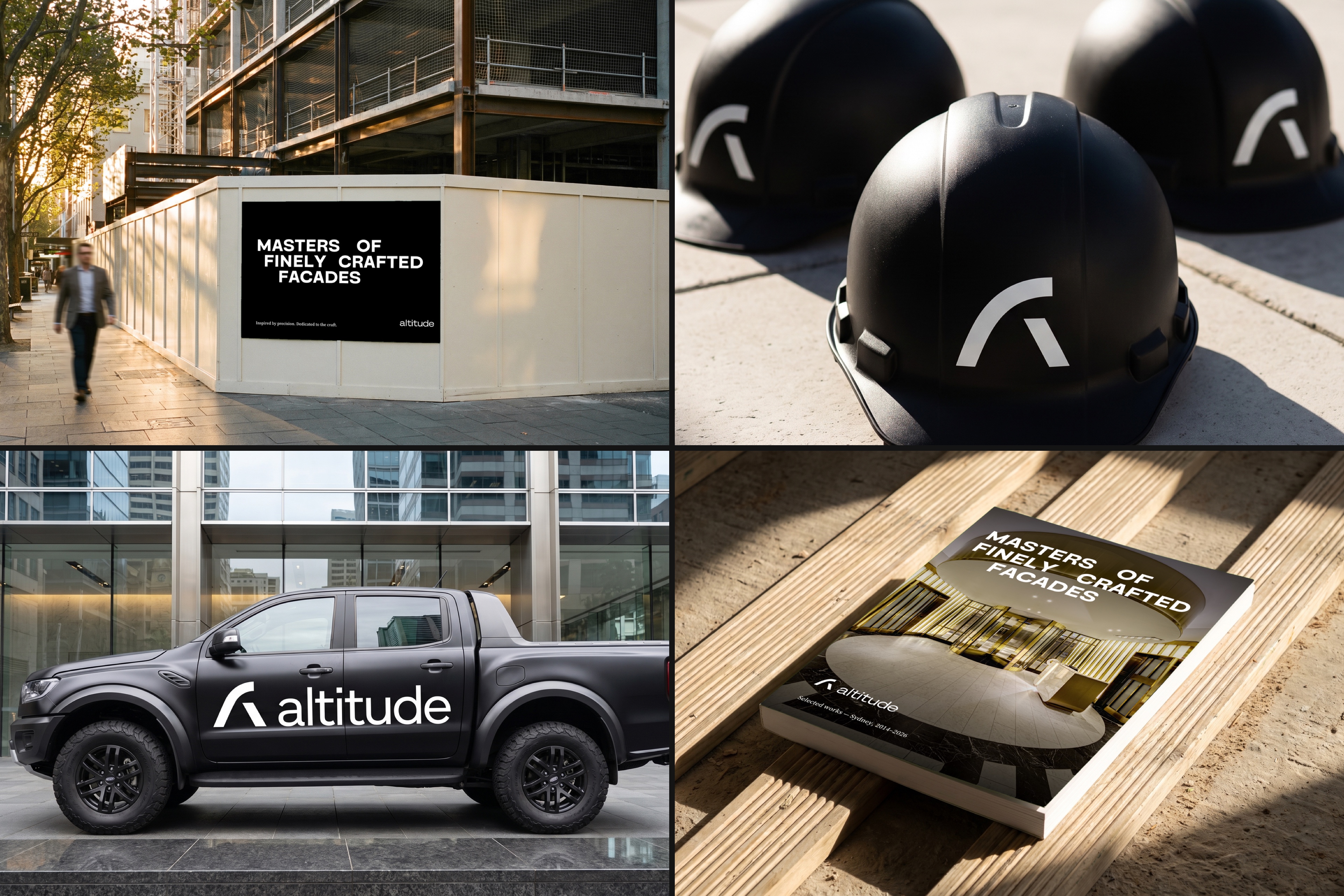
When one team builds all of that in one process, the pieces fit because they were never separate. Altitude Facades is a useful example. Belver repositioned the business from facade contractor to family-led specialist at the top end of the market, built the mark from the arch, rebuilt the site around the landmark projects, and applied the system to hoardings, workwear, vehicles and tender documents. An architect who sees the hoarding, visits the site and reads the capability brochure meets one business three times, and remembers it.
Three things, mostly.
Recognition compounds. Every exposure to a coherent brand reinforces the last one. Every exposure to a fragmented brand starts again. Over a year of marketing, the coherent brand gets remembered for the same spend.
Marketing gets cheaper. Campaigns, ads and content built on a clear position and a consistent system do not need to re-establish who you are each time. Landing pages convert better when they look and sound like the ad that brought the visitor.
Decisions get faster. With a system, the next piece of work has rules. The new hire, the freelancer, the printer and the agency all work from the same guidelines, and the founder stops being the only person who can tell whether something is on-brand.
There is a fourth change, newer than the others. AI has made it cheap to produce more: more posts, more pages, more variations. Used with a clear system, that makes the marketing more effective, because every piece is generated from the same direction. Used without one, it produces more of the same slop everyone else is producing, faster. A clear position and a coherent system are now the difference between volume that builds a brand and volume that buries it.
Both markets are crowded and both are visual. In Sydney, a professional services firm, a property developer or a hospitality group is competing for attention against businesses that have already invested properly in how they present. On the Gold Coast, the market has grown up fast, and plenty of businesses that were the right size for a DIY brand five years ago are now winning work that their brand undersells.
In both, buyers compare. A tender panel sees four submissions side by side. A customer opens three tabs. The business that presents as one coherent, confident system wins the benefit of the doubt before anyone reads the detail. The one that looks assembled from parts is judged as if it works that way too.
Belver works from studios in Chippendale and Burleigh Heads precisely because the reading of each market matters. Positioning for a Sydney CBD advisory firm is a different decision from positioning for a Gold Coast hospitality brand, even when the method is the same.
Put your homepage, your Instagram grid, your latest proposal and your business card on one screen. Then ask:
Two or more "no" answers and the brand is costing you something, whether or not it shows up on a report.
Not every fragmented brand needs a full rebuild. The honest assessment usually lands in one of three places.
Refresh. The positioning is sound and the identity has equity. The job is to write the rules down, tidy the system and bring the stray pieces into line. Weeks, not months.
Rebuild the system, keep the core. The business has outgrown parts of the brand but not all of it. Keep what still carries equity, rebuild the rest to match the next chapter, and plan the rollout so existing customers come with you. Three to six months.
Rebuild everything. The business has changed so much that the brand no longer describes it. New positioning, new identity, new voice, new website, built as one system. This is the work Belver is most often asked to do for established businesses, and it is the work we did on ourselves when Slickweb became Belver in 2024.
The wrong answer is the fourth one: commissioning another piece from another supplier and hoping it fixes the whole.
What is an integrated brand system? A brand where strategy, identity, voice, website and marketing are designed together from one positioning decision, so every surface is recognisably the same business and every new piece has rules to follow.
Can we integrate what we already have instead of starting over? Often, yes. If the positioning is sound and the identity has equity, the work is writing the system down and bringing the stray pieces into line. If the business has moved and the brand has not, a rebuild is usually cheaper than years of patching.
Do we need a Sydney or Gold Coast agency, or can this be done remotely? Local market knowledge helps the positioning, and the first workshops are better in person. The build runs well remotely. Belver works from both cities with clients across Australia.
How long does it take to build an integrated brand system? A focused system for a new venture runs about eight weeks. A full rebuild for an established business runs three to six months, with a phased timeline so you know what arrives when.
What should we budget for it? A business should be ready to invest at least $10,000 to $15,000 to consider a proper branding project. The figure scales with what has to be rolled out: collateral, print, packaging, website, social, content and production.